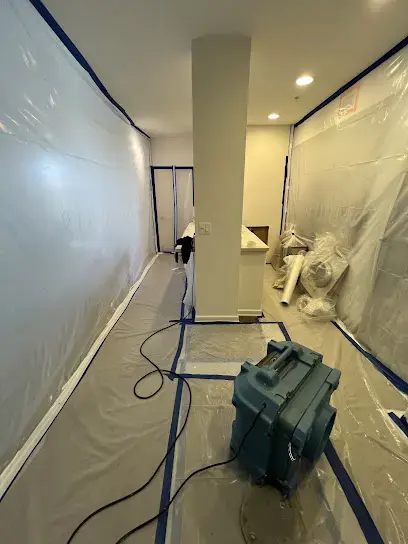
A brown stain on the ceiling, a drip from a light fixture or a bubble in the paint can mean the water is coming from the unit above. Aliso Viejo has many condo and townhome communities, and in a shared building one leak often affects more than one home. This post explains who to tell, what to photograph and how the drying is staged across both units.
Key takeaways
- In a shared building, a leak that crosses a ceiling or wall needs both units mapped and documented.
- Shut off the water in your own unit first, then tell the upstairs neighbor and the property manager or association.
- Do not poke holes in a sagging ceiling without a plan for catching the water that is trapped behind it.
- Photographs and dated messages protect a claim, especially when two owners or an owner and a renter are involved.
- Drying has to be staged so work in one unit does not leave the other wet.
A city of shared walls
Aliso Viejo is a master planned community where homes were first offered for sale in March 1982, and the housing is built out from that date. At the 2010 census the city had 18,867 housing units, with 60.7% owner occupied and 39.3% renter occupied.
That mix means the person above or beside a unit may be an owner, a renter or an investor, and the rules for who handles the leak differ.
- Water travels along pipes, framing and drywall seams to the lowest opening.
- A leak that starts in a bathroom upstairs can appear in a living room ceiling below.
- Water can also run sideways across a shared wall into a neighboring unit.
First steps inside your own unit
Stop what you can control
Shut off the water supply to your own unit if the leak could be coming from your plumbing. Switch off ceiling lights and fans that sit near a wet area.
Place buckets or tubs under drips, and move furniture and electronics out of the wet zone.
Photograph the damage
Take pictures of the ceiling, the walls and the floor from several angles. Note the date and time you first noticed the stain and whether it has grown.
- Wide shots of each room and close shots of every stain.
- Photographs of wet furniture, rugs and stored items.
- A short video panning across the damaged ceiling.
Who to tell, and in what order
The first call is to the upstairs neighbor, if that is reachable, and then to the property manager or the association. Tell them the water source may be in their unit, and ask them to shut off their supply if needed.
The Aliso Viejo Community Association maintains most slopes, medians and parks, but the interior of a building is handled by the condo or townhome association and its documents. Check which rules apply to your building.
- Send a written message with the date, the time and the photos.
- Ask the neighbor to look for a failed supply hose, a leaking drain or a running toilet.
- Keep copies of every message and call for the claim.
How the leak gets traced and where it starts
A stain on the ceiling is where the water ended up, not necessarily where it started. Moisture meters and a thermal camera show how far it traveled and which bay of the ceiling is wet.
The condo water damage page for Aliso Viejo describes how both units are mapped and documented, so the source and the affected areas are recorded in one place.
Most leaks that cross a ceiling start with a small failure that went unnoticed: a cracked supply hose behind a toilet, a loose tub drain, a dishwasher door seal or a washer hose that has stiffened with age. In a stacked building, each of these can reach the unit below within a day.
The Aliso Viejo hub page lists the other water problems the city sees, and the main condo and townhome water damage page covers the shared wall approach in more detail.
Keep the association's notice, any plumbing invoice and the drying readings, since they show when each unit reached a dry reference.
- Common sources are a supply hose, a tub or shower drain, a toilet seal, an ice maker line or a washer hose.
- A slow leak can run for weeks and still look small from below.
- A ceiling that sags has trapped water above it and needs careful opening.
- Toilet supply hoses and shutoff valves that weep slowly.
- Shower pans, tub drains and the seals around them.
- Dishwasher and ice maker connections under a counter.
- Water heater leaks in a closet that backs onto a neighbor.
Opening and drying a wet ceiling
A bulging ceiling is released at a controlled point so trapped water drains into a container instead of falling across the room. Wet insulation and drywall that cannot be dried are removed back to dry material.
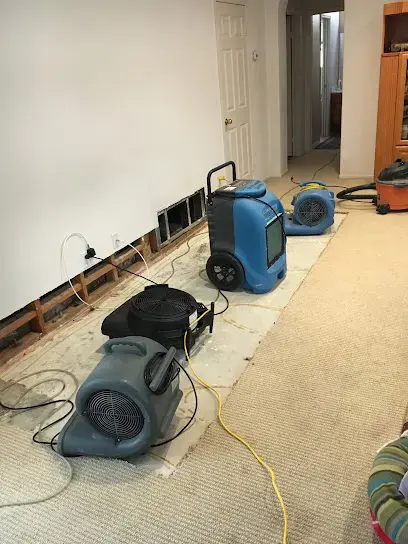
A ceiling leak water damage job then dries the open bays with air movers and dehumidifiers, while moisture readings decide how long the equipment runs.
Drying both units and keeping the records
Drying equipment in one unit can only do so much if the wall or ceiling shared with the next unit is still wet. The work has to be coordinated so both sides reach a dry reference.
That means the neighbor's unit may need access, even if there is no visible damage there yet.
Owners should keep photos, the association's notice, plumbing invoices and the drying readings. Renters should send the owner a written notice and keep a copy.
If belongings were damaged, make a list with approximate values and keep any receipts.
- Both units are read with the same meters and compared with a dry reference.
- Equipment is placed so it dries shared walls from both sides where needed.
- A final readings check is recorded before any repair work starts.
Questions
Who pays when the water comes from another unit?
It depends on the cause, the building documents and the insurance on each unit. Photographs, dates and a written record help, and the association or insurers can sort out responsibility.
Should the ceiling be opened right away?
If it is bulging or sagging, trapped water needs to be released safely. Otherwise, readings first show how much of the ceiling is wet.
Can a neighbor refuse access for drying?
Access is usually needed so both sides of a shared wall can be dried. The association or manager can help arrange it.
How long does a ceiling stay wet?
It depends on the amount of water and the materials. Readings, not the look of the surface, show when the ceiling and the wall behind it are dry.
What if the leak stops by itself?
The water already in the ceiling and walls stays there. Wet insulation and drywall can keep holding moisture, so readings are still worth taking.