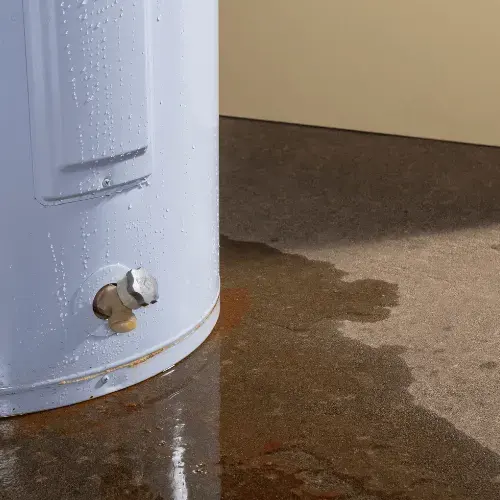
In many Laguna Niguel homes the water heater lives in the garage or a utility closet beside it. When a tank fails, the water runs across the concrete, under stacked boxes and into the bottom of the wall that the heater stands against. This post covers what to shut off, what the water reaches and how the cleanup and drying are handled.
Key takeaways
- Shut off the cold water supply to the tank first, then the power or the gas, and only touch the controls from dry ground.
- A garage slab spreads a tank leak wide, so cardboard, shelving and the base of the wall can be wet before anyone notices.
- A leaking tank is replaced, not repaired, but the wet area needs extraction and drying whether or not the new tank is in yet.
- Water that reaches the drywall behind the heater or the flooring inside the house door can wick upward and sideways.
- Moisture readings, not the look of the surface, decide when the garage and the connecting rooms are dry.
Why garage tanks leave so much water behind
Laguna Niguel is a master planned city with many homes built from the 1970s through the 1990s, and water heaters in garages are one of the usual sources of water loss there. A tank holds a large volume of water, and a failed seam or a corroded fitting can release it quickly.
A garage floor is flat concrete with nowhere for the water to go, so it spreads. It reaches the base of the wall, slides under shelves and can cross the threshold into a laundry room or hallway.
- Cardboard boxes soak up water and hold it against the floor.
- Wood shelving and plywood bases swell and can stay wet for a long time.
- The wall behind the tank draws water up through the drywall paper.
- A door into the house can let water slip under the threshold.
The first steps, in order
The order matters because electricity and water do not mix. Wet floors and a powered heater are a shock risk, so the first move is to cut the supply, not to start mopping.
Stop the water and the energy
Turn the cold water supply valve on the pipe above the tank to closed. If the heater is electric, switch off its breaker, and if it is gas, turn the gas control to off.
- Do not stand in standing water while touching the breaker panel.
- If the garage floor is flooded and the panel is nearby, stay out and have the power cut from a dry spot or by a professional.
- Never relight a pilot with water around the tank.
Protect what can still be saved
Lift boxes, tools and anything stored on the floor onto dry surfaces. Photograph the area before moving things so there is a record of what was wet.
What the water reaches beyond the garage floor
The wet slab is only part of the loss. Water travels along the path of least resistance, and in an attached garage that path often leads inside the house.
A moisture meter pressed against the drywall shows how high the wall has wicked, and readings on the flooring inside the connecting door show whether water crossed the threshold.
- Drywall behind the heater, which can wick water several inches above the floor.
- Baseboards and the bottom of the wall in a laundry room or hallway.
- Flooring just inside the house door, including vinyl planks, laminate and tile edges.
- Cabinets or a washer standing against the shared wall.
How extraction and drying handle a tank failure
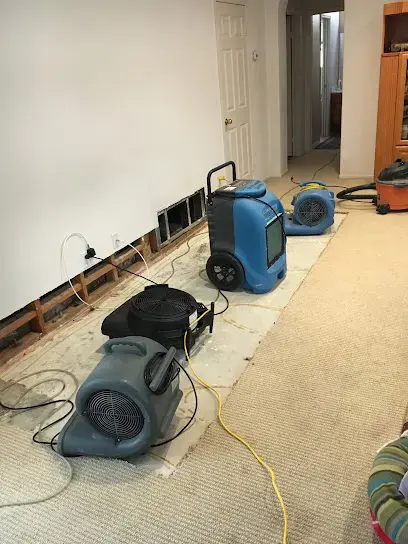
The work starts with removing the standing water. A water heater leak cleanup job pulls the water off the slab first, so it does not keep soaking into the materials around it.
After extraction, wet drywall or insulation that cannot be dried in place is cut out at the bottom of the wall. Air movers and dehumidifiers then run while a meter tracks the readings.
Fast removal of the bulk of the water is what keeps the rest of the job small, which is why emergency water extraction comes first on a garage loss.
Replacing the tank is a separate step
A tank that has leaked from the body or a seam is not repaired. A plumber replaces it, and the new tank can be set on a drain pan with the drain piped to a safe spot.
Replacement and restoration do not have to wait on each other. The water can be extracted and the drying equipment can be running while the plumber orders and installs the new tank.
- Ask the plumber to check the shutoff valve and the supply connectors at the same visit.
- Ask whether the relief valve discharge pipe runs to a safe place.
- Keep the old tank's age and any paperwork for the claim.
Keeping the next tank from flooding the garage
A water heater does not last forever, and the best protection is noticing small signs before the tank fails. Rust at the base, damp cardboard nearby or a puddle that returns after being wiped up are all reasons to call a plumber.
A drain pan under the tank catches small leaks, though it cannot hold a full tank failure.
- Look at the base of the tank and the connections every few months.
- Know where the cold water shutoff valve is and that it turns freely.
- Keep boxes and paper goods off the floor near the heater.
- Replace an old tank before it fails rather than after.
Appliances near the heater can leak too
Garages and utility rooms often hold a washer, a second refrigerator or a utility sink, and each has its own hoses and connections. A damp floor is not always the tank.
If the heater looks dry, check the washer supply hoses and any fridge ice maker connection before assuming the water source. Leaks from those items are covered on the appliance leak water damage page.
Questions
Should the water heater be turned off right away?
Yes. Close the cold water valve above the tank, then switch off the breaker or turn the gas control to off. Do both from dry footing.
Can a leaking tank be repaired?
A leak from the body of the tank or a seam usually means the tank has failed and is replaced. A leak from a fitting or valve might be fixed by a plumber, who can tell the difference.
How far can the water spread from a garage tank?
A flat slab lets it spread across the whole floor, under shelving and toward any door into the house. A moisture meter shows how far it traveled into walls and flooring.
Is the drywall behind the tank ruined?
Not always. If it is only damp at the bottom, it can sometimes be dried in place. If it is soft or stained, the bottom section is cut out and replaced.
What should be kept for an insurance claim?
Photos of the leak and the wet areas, the age and make of the tank, the plumber's invoice for the replacement and the drying readings from the restoration team.