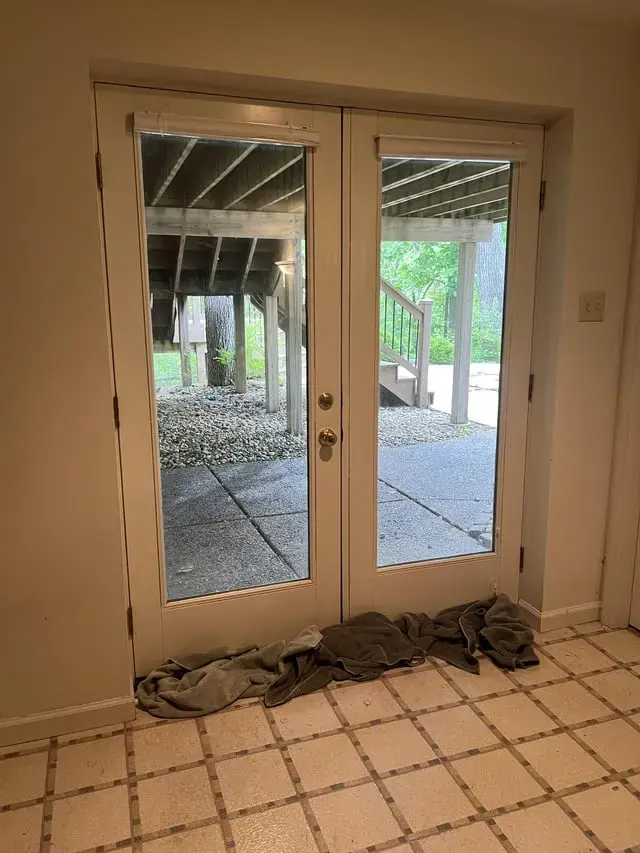
Laguna Niguel gets about 13 inches of rain a year, nearly all of it from November through March, and it often arrives in a few strong storms. On a graded hillside, that water follows slopes, terrace drains and V ditches toward the nearest low point, and sometimes that is a garage door or a patio slider. This post covers the first steps when runoff gets inside and how the cleanup is handled.
Key takeaways
- Laguna Niguel receives about 13 inches of rain a year, almost all of it from November through March, so one storm can bring a large share of the season.
- Runoff that comes from outside is dirty water: it carries soil, leaves and oil, and it is treated that way.
- Cut power to wet areas, lift belongings and photograph the water before moving anything.
- Extraction comes first, then mud removal and drying of the slab edge, the wall bases and any flooring nearby.
- Slab on grade homes have no crawl space, so the water spreads across the garage and into the house along the floor.
How runoff reaches a hillside garage and what it carries
Laguna Niguel was built on hills and graded into terraces, with drains and V ditches meant to carry storm water away from homes. When a heavy storm outruns those systems, or a drain clogs with leaves, the water goes where the grading sends it.
Winter storms and atmospheric rivers push runoff down slopes toward houses, and storm runoff in January 2023 and February 2024 showed how quickly that can happen.
Water from a broken pipe starts clean. Water that crossed a hillside has passed over soil, plants, driveways and street surfaces.
Because of that, absorbent materials that sat in it, such as carpet, pad and cardboard, are usually discarded, and hard surfaces are cleaned before they are dried.
- A clogged terrace drain or V ditch sends water over the edge instead of down the channel.
- A driveway that slopes toward the garage funnels water straight to the door.
- A patio slider or side door at ground level gives water a second way in.
The first steps once water is inside
Safety first
Do not stand in water near outlets, the panel or a garage door opener. Have the power cut to the garage and any wet rooms from a dry spot.
Wear boots and gloves. Runoff can carry soil, oil and debris.
Record and rescue
Take photographs of the water, the door, the drain and the slope outside before anything is moved. Then lift boxes, tools and cars out of the wet area if it is safe to do so.
- Photograph the high mark of the water on walls and boxes.
- Move cardboard and paper first, since they soak up water fastest.
- Do not use a household vacuum on standing water.
How extraction, the cleanup list and drying go
The first job is extraction. Emergency water extraction pulls the water off the slab with truck mounted or portable equipment so it cannot soak deeper.
After the floor is clear, mud and silt are shoveled and rinsed away. Wet drywall at the base of the walls is checked with a meter and cut out where it will not dry.
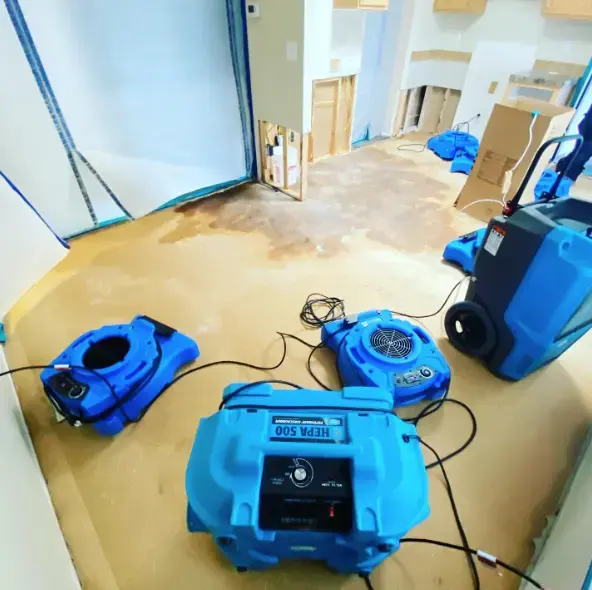
Then storm and hillside runoff water damage work moves into drying: air movers and dehumidifiers run, and readings are compared with a dry reference.
A runoff loss in a garage is rarely only a garage loss. The water crosses the slab, climbs the bottom of the walls and may reach flooring in the rooms next door.
Moisture meters and a thermal camera map the full path, so the plan covers every wet area and not only the visible puddle.
- Standing water is removed from the garage and any rooms it reached.
- Mud and debris are cleared from the floor and wall bases.
- Baseboards, drywall and flooring that cannot be cleaned are removed.
- The slab edge, wall cavities and flooring are dried until the readings are dry.
- Garage floor, wall bases and any built in cabinets.
- Doors and thresholds between the garage and the house.
- Flooring, baseboards and drywall in the nearest rooms.
- Stored items that need cleaning, drying or disposal.
Slab homes spread water differently
Most Laguna Niguel homes sit on a slab. There is no crawl space to catch the water, so it moves along the floor into rooms beside the garage.
A moisture meter on the baseboards and flooring shows how far the water reached. Wet flooring that looks fine on the surface can still be holding moisture beneath it.
Preparing before the next storm
Preparation is mostly about drains. A short check in October, before the rainy months, can save a lot of work later.
- Clear leaves and soil from terrace drains, V ditches and downspouts.
- Look at where the driveway and yard slope, and where water would go.
- Keep sandbags or similar barriers ready if the garage door sits low.
- Know where the breaker panel and the main water shutoff are.
Records for the claim and related roof leaks
Dated photographs, a list of what got wet and the drying readings make a runoff claim easier to support. Keep the receipts for any emergency supplies and write down the date of the storm.
If a drain or a slope seems to have contributed, photograph that too, since the cause is part of the story.
A big winter storm can send water in through both the roof and the ground floor. The two are separate losses with different fixes.
If a ceiling stain appears at the same time, the roof leak water damage page explains how that side is traced and dried.
A heavy winter storm can also push water through the roof at the same time. Those are separate losses with separate repairs, so note each wet area on its own, and use the notes when speaking with the insurer.
Questions
How much does Laguna Niguel rain a year?
About 13 inches, nearly all of it from November through March. A few strong storms can deliver much of the total.
Is storm runoff in a garage clean water?
No. It carries soil, oil, leaves and debris, and it is treated as dirty water that needs cleaning as well as drying.
Should the garage door be opened to drain the water?
Only if it is safe and the outside is not flooded. Cut the power first, since a wet garage door opener is a shock risk.
Can wet drywall at the bottom of the wall be dried in place?
Sometimes. If it is firm and readings come down, it can be dried. If it is soft or stained, the lower section is cut out and replaced.
What should be documented for a claim?
Dated photos of the water, the door, the drain and the slope, the items that got wet and the drying readings from the restoration team.