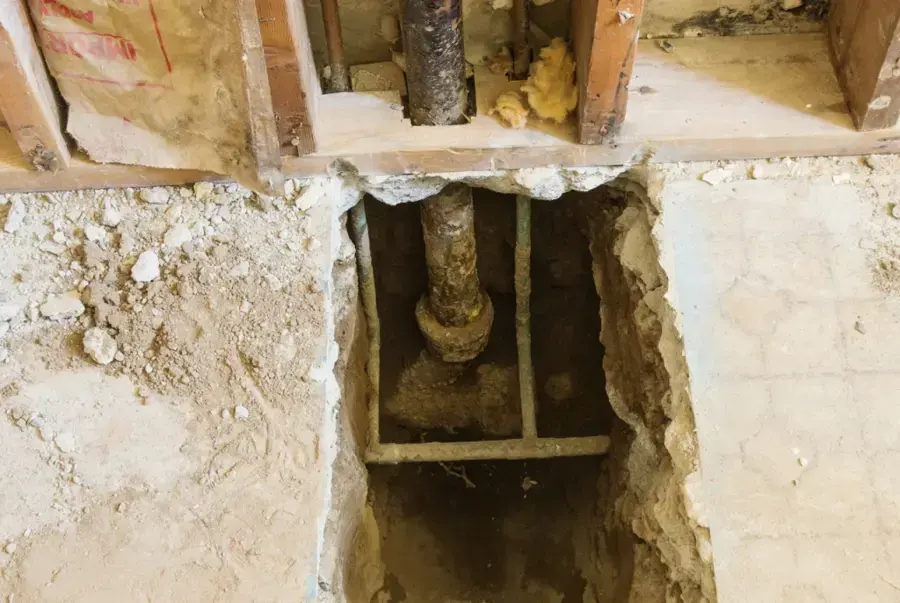
A floor that feels warm underfoot, a faint hiss when the house is quiet or a water bill that climbs for no clear reason can all point to a leak in a supply pipe under the concrete. Laguna Niguel is a master planned hillside city where most homes were built from the 1970s through the 1990s, and many of them sit on a slab with copper supply pipe beneath it. This post explains how to tell a slab leak from a harmless warm spot, what to do first and how the restoration work is carried out.
Key takeaways
- A warm patch on a floor can come from a hot water supply pipe leaking under the slab, but sunshine or a floor register can warm a spot too, so confirm it with a meter test.
- With every fixture off, a water meter dial that keeps moving points to a leak somewhere between the meter and the fixtures.
- If the floor is wet or the hiss is loud, close the main shutoff valve at the house and keep the water heater off until a plumber has looked.
- Most Laguna Niguel homes date from the 1970s through the 1990s and sit on a slab with copper supply pipe, so the slab is a fair first suspect when flooring is damp and no source is visible.
- Moisture mapping finds the wet area first, so the slab is opened only where the readings point.
Why a warm spot on the floor points to the slab
In a slab on grade home, the supply pipes that feed the kitchen, bathrooms and water heater often run through or beneath the concrete floor. When a hot water pipe springs a leak there, the heated water can warm the concrete above it, and one patch of floor feels different from the rest.
Slab leaks in copper supply pipe are one of the plumbing failures typical of the city's older housing. Even so, a warm spot alone proves nothing.
- A sunny patio door can warm a strip of tile all afternoon.
- A floor register or a wall heater can leave a warm patch nearby.
- A warm spot that appears at night, in shade, with the heater off, deserves a closer look.
Other signs a supply pipe is leaking under the floor
A slab leak rarely announces itself with a puddle. The signs build slowly and are easy to blame on something else.
- A hissing or running sound when every tap and appliance is off.
- A water bill that rises with no change in how the household uses water.
- Low water pressure at a faucet that used to run strong.
- Damp carpet along a wall, or tile grout that stays dark.
- Baseboards that swell or paint that bubbles low on a wall.
- A musty smell in a room with no obvious source.
What to do first
Run a simple meter test
The water district meter is the quickest way to confirm a leak. Moulton Niguel Water District serves Laguna Niguel, and the meter sits near the curb or the front of the property.
- Turn off every tap, the dishwasher, the washer and the ice maker.
- Open the meter box and look at the small leak indicator or the dial.
- Watch it for a few minutes without anyone using water.
- If it keeps turning, water is escaping somewhere on the property.
Shut the water off and protect the floor
Close the main shutoff valve where the supply enters the house. Turning the water heater off protects the tank and stops hot water from feeding the leak.
Lift small rugs and move furniture legs off wet flooring. Photograph the damp areas before anything is moved or dried.
What a slab leak does to the rest of the house
Water under a slab does not stay under it. It finds cracks, expansion joints and the edges where the slab meets the walls, then wicks upward into whatever sits on top.
The longer it runs, the more material is affected, and the harder it is to dry in place.
- Hardwood and laminate cup, buckle or separate at the seams.
- Carpet pad holds moisture and can stay wet long after the surface feels dry.
- Drywall and baseboards draw water up from the bottom edge of the wall.
- Cabinet bases and toe kicks stay damp where air cannot reach them.
How the restoration work is carried out
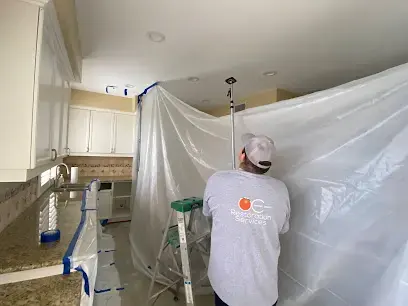
Once the plumber has confirmed and repaired the pipe, the restoration side begins with finding out how far the water traveled. Meters and a thermal camera map the wet flooring, wall bases and cabinet bays.
The goal is to open as little as possible. A slab leak water damage job uses those readings to decide where flooring comes up, where a wall base is cut and where the slab itself needs attention.
Standing water is pulled out first through water extraction, then air movers and dehumidifiers run until the readings match a dry reference. Wet carpet pad and swollen baseboard that cannot be saved are removed so they do not hold water against the framing.
Slab leak or pinhole leak: how to tell them apart
Copper pipe can fail in two common ways, and the damage looks different. A slab leak is water escaping under the floor, while a pinhole leak is a tiny corrosion hole in a pipe inside a wall or ceiling.
A stain on a wall or ceiling, or damp drywall at head height, leans toward the wall. A warm or damp floor with no wall damage leans toward the slab, and the pinhole leak water damage page explains the wall side in detail.
- Floor symptoms first: warm spots, damp carpet, lifting flooring.
- Wall or ceiling symptoms first: stains, bubbling paint, a damp patch above a fixture.
- Both can show up as a higher water bill, so the meter test applies to either.
Records worth keeping
A leak claim goes more smoothly with a clear record. Keep the dated meter photo, the water bills from before and after, the plumber's report and pictures of every wet surface.
The drying readings taken during the work add a record of when the structure reached a dry reference, which helps if flooring has to be replaced later.
Questions
Can a floor be warm without a slab leak?
Yes. Sunlight, a nearby heater or a heated bathroom can warm a floor. A warm patch that appears in a shaded room with nothing running nearby is the kind worth testing with the water meter.
Is a slab leak an emergency?
Water is escaping under pressure around the clock until the main shutoff is closed, so closing it right away limits the damage. The repair and drying can then be scheduled in order.
Does the slab always have to be cut open?
No. Moisture readings and the plumber's pipe locating show where the leak and the wet area are, and the slab is opened only where the readings point. Sometimes the pipe is rerouted instead.
How can the leak be found without tearing up the whole floor?
Moisture meters and a thermal camera trace the wet area on the surface, and the plumber uses listening and locating tools to pinpoint the pipe. Together they keep the opening small.
What should be photographed for a claim?
Take pictures of the meter, every damp floor and wall area, the swollen baseboards and any stored items that got wet. Add the plumber's report and keep the water bills.