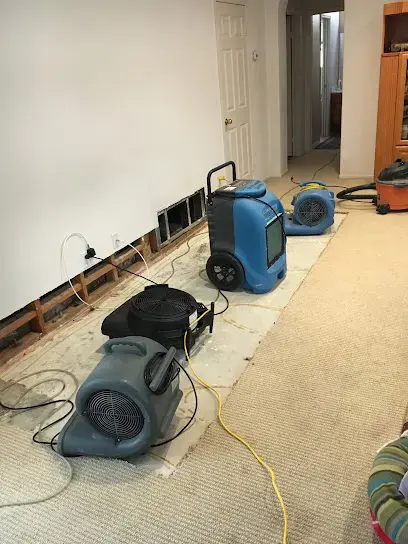
Once standing water is gone, the real work is moisture inside the structure. Framing, subfloor and the back of drywall hold water that cannot be seen, and drying them takes the right equipment, set the right way, and checked until the readings prove the job is done.
How structural drying works
Drying is a physical process, not a waiting game. Air has to pass over wet surfaces, and the moisture it picks up has to be removed from the room. Both depend on placement and sizing.
- Meters and a thermal camera map which materials are wet before equipment is set.
- Air movers are aimed across floors and wall bottoms, and the cavities are opened or vented where needed.
- Low-grain dehumidifiers pull the moisture out of the air so the materials keep releasing theirs.
- Readings are taken every visit, and equipment is moved as the wet areas change.