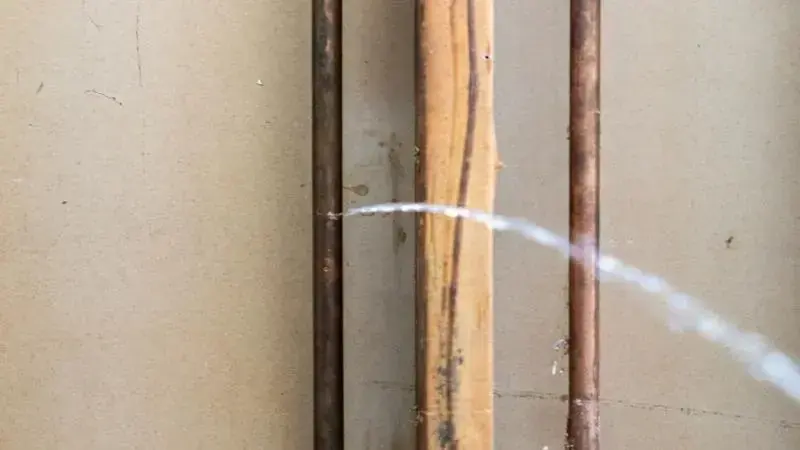
Signs of a leak inside the wall
Quiet clues come first. A thin hissing sound in a wall, a warm or cool patch on drywall, or a water bill that rises with nothing new running often means copper is leaking behind the surface.
- Paint that bubbles or peels in one patch.
- Drywall that feels cool and soft to the touch.
- A damp smell in a closet or hallway that comes and goes.
The ceiling leak page covers stains below, and structural drying explains the equipment.
Water that travels down
A leak in an upstairs wall rarely stays upstairs. Water follows the pipe, the top plate and the framing down into the ceiling of the room below, and a small stain on that ceiling can mean a soaked wall cavity above it.
Attached residences such as those in Ritz Pointe share walls and ceilings, so a spray in one unit can end up in the next. Before drying is planned, the tech meters the party wall, and the file lists each space the water touched.
The plumber, the permit and the claim
Pipe work and drywall work follow separate paths. The plumber repairs the copper and, where the job calls for a permit, deals with the City's Building and Safety division, while the restoration team stays with the wet wall, the insulation and the ceiling below.
For a claim, two records help: the plumber's invoice for the pipe, and the drying file with the moisture map, daily readings and photos. Many policies treat the two parts differently, and your own insurer can say what yours pays.