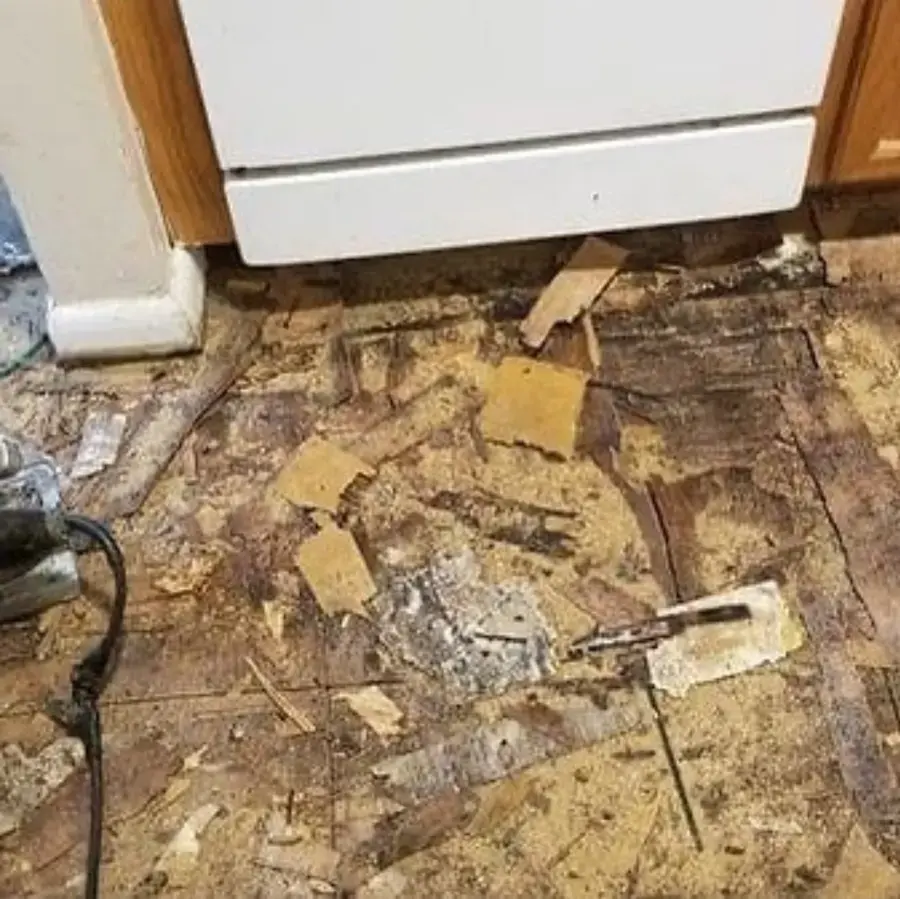
Appliance leaks are quiet. A cracked washer hose, a loose dishwasher fitting or a refrigerator water supply can drip behind and beneath the unit, soaking the subfloor and cabinet base before a puddle appears. In houses, condominiums and apartments alike, the damage is often found when flooring lifts or a smell begins. By then the subfloor may have been damp for a long time, which is why meters, not eyes, decide what needs drying.
How an appliance leak is dried
The appliance is moved away from the wall first, which shows the water path and lets air reach the area. Dishwashers and refrigerators often leak at the back or underneath, where the floor stays wet longest. The steps that follow depend on what the meters find.
- Toe kicks are removed so air can reach the cabinet cavity.
- Water is extracted, and meters map the floor, baseboard and cabinet base.
- Laminate or wood flooring is lifted where it holds moisture against the subfloor.
- Air movers, mats and a dehumidifier dry the area until readings meet the goal.