Condominiums and townhomes

Condo and Townhome Water Damage in Laguna Hills

Water in a condominium or townhome often crosses a wall, a floor or a ceiling into the next unit. Each unit is mapped and dried separately, and records are kept for the owner, the association and the insurer.

(888) 450-9281Call about a condo leak
Each unit mapped Shared walls checked Records per unit
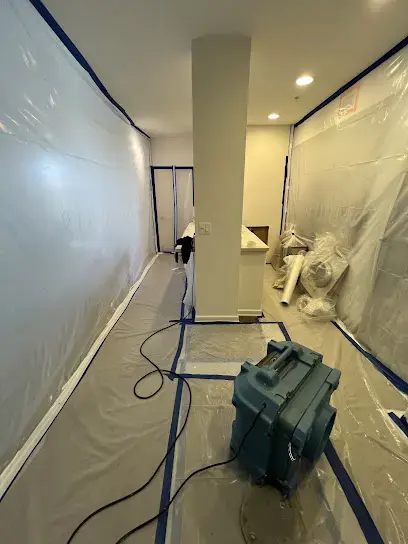
Interior hallway sealed with plastic containment and a dehumidifier, a representative photo for Laguna Hills condo dry-outs
Right now

First steps for condo and townhome water damage in Laguna Hills

  1. 1

    Stop the source

    Close the unit's shutoff valve, and tell the neighbors below and beside you.

  2. 2

    Notify the association

    Report the loss to the association or landlord, who may control the building plumbing.

  3. 3

    Photograph every room

    Photograph each wet room and item before anything is moved.

  4. 4

    Call for mapping

    The crew maps your unit and checks the shared walls and ceiling.

Laguna Hills housing includes condominiums, apartments and mobile homes alongside detached houses, and 25.3% of units were renter-occupied at the 2010 census. In an attached building, a leak rarely stays in one unit, and the first question is who is affected, not only what is wet.

How an attached-home loss is handled

A condominium loss involves more people than a house does: the owner or tenant, the neighbors, the association and at least one insurer. The work keeps their records apart.

  • The unit where the water began is mapped first, then the shared wall, floor or ceiling.
  • Neighboring units are checked with meters, with the occupant's permission.
  • Wet drywall, pad and baseboard are removed where readings call for it, in each unit separately.
  • Air movers and dehumidifiers dry each unit, and daily logs are kept per unit.
Typical cost ranges

What does condo and townhome water damage cost in Laguna Hills, CA?

Condo pricing depends on how many units are involved and how far the water traveled through shared walls and ceilings. One contained unit is the smallest job, and each added unit brings more mapping, removal, equipment and separate records.

One unit, contained

$2,500 to $6,000
  • Mapping and extraction
  • Baseboard and low drywall
  • Daily readings

Two units, shared wall or ceiling

$6,000 to $12,000
  • Both units mapped and dried
  • Ceiling below opened
  • Records for each unit

Three or more units

$11,000 to $18,000
  • Stacked units dried together
  • Wider removal
  • Extended monitoring

Ranges are typical figures, not a quote. The category of water, the square footage, the material class and how fast drying started move the number most. The water damage cost calculator gives a closer range.
Step by step

How condo and townhome water damage is handled in Laguna Hills

The tech who does the walkthrough finds the source and maps the moisture before equipment goes down, and the drying team keeps it running until the readings say dry.

  1. 1

    Mapping

    Meters trace the water through the unit and into shared walls, floors and ceilings.

  2. 2

    Extraction and removal

    Water is extracted, and wet materials are removed unit by unit.

  3. 3

    Drying

    Equipment is set in each unit, with separate daily logs.

  4. 4

    Records

    Each owner, tenant and insurer receives the file that applies to their unit.

Who is responsible for what

Boundaries between the owner's unit and the shared structure vary by building, and the association documents decide which pipe or wall belongs to whom. The restoration scope does not wait for that decision, so water is extracted and drying begins while insurers and associations sort it out. See ceiling leak water damage for leaks that come from above.

Renters and landlords

Renters should notify the landlord and their own renter policy, because personal belongings are usually covered by the tenant's policy and the building by the owner's. The records are written so each insurer can read what applies to it. The main condo page explains the general process.

Water in a stacked building can move through several floors, so a leak on the top level may involve more than one unit below. Each of those units is mapped, because a floor that looks dry can still hold water in the wall beside it, and each occupant is told what the readings found.

Laguna Hills, CA service area
Service area

Condo and townhome water damage across Laguna Hills and nearby towns

Condo and townhome work covers ZIP codes 92653 and 92654, including Nellie Gail Ranch, North Laguna Hills, the Westside Annexation area, the Sheep Hills Park area and apartment buildings near El Toro Road.

The same service nearby: condo and townhome water damage in Laguna Niguel, Aliso Viejo, Laguna Beach.

Water damage restoration in Laguna Hills · every town covered

Answers

Condo and Townhome Water Damage questions in Laguna Hills, CA

Who is responsible when water comes from a neighbor's unit?

It depends on the cause and the association rules. The records show where the water began, which helps the insurers and owners decide.

Does the association handle the drying?

Usually the association handles shared structure and the owner handles the unit interior. The crew can work in either, and the records follow that split.

Do I need permission to dry a neighbor's unit?

Yes. Meters and equipment go into a unit only with the occupant's or the association's permission, and each unit has its own records.

What if I rent?

Tell the landlord and your renter policy. The landlord's insurer usually covers the building, and yours covers your belongings.

Will drying disturb the neighbors?

Equipment makes noise and uses power. The crew places it with that in mind and explains the schedule to each household.

How are costs shared between units?

Each unit is documented separately, so each insurer sees only the work and materials that apply to its policy.

Still dealing with it?

Water in a Laguna Hills condominium rarely stays in one unit

(888) 450-9281Call a Laguna Hills crew
24/7 emergency dispatch

Every unit mapped, every record kept

A call covers which unit the water began in, which neighbors are affected and the plan for mapping and drying each one, with separate files for the claims.

(888) 450-9281Call about a condo leak
Call (888) 450-9281 · 24/7