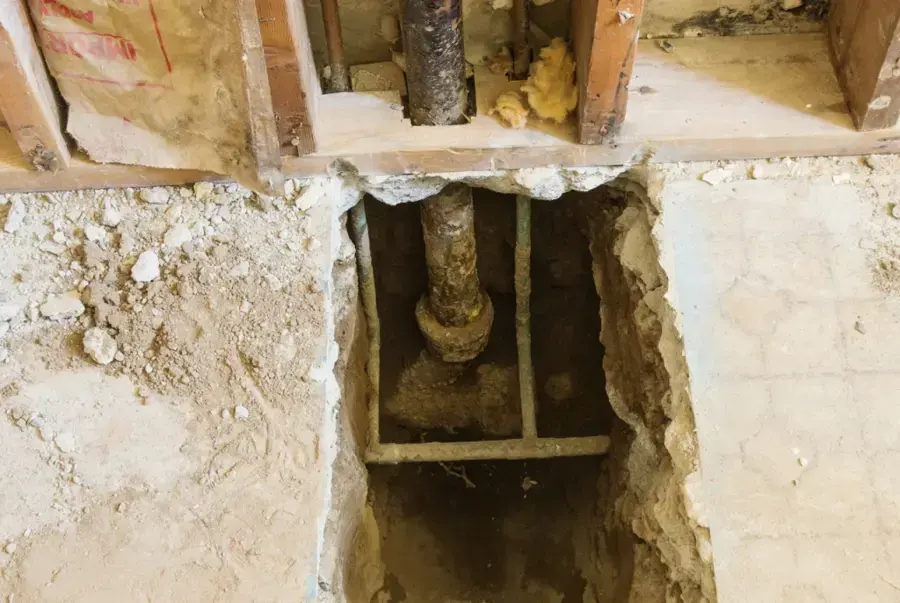
Where the leak repair and drying meet
Drying cannot finish while the pipe is still leaking, and a trench through the slab changes where the wet area is. The crew and plumber compare notes so the repair opening is dried too and not covered up wet before new flooring goes down.
- Shutoff confirmed and the leak located by the plumber
- Drying openings kept clear of the work area
- Readings shared when the repair is finished
Both trades work from the same moisture map, which keeps the repair from hiding damp material.
What the floor type changes
Carpet and pad are usually the fastest to deal with because the pad comes out and the slab dries beneath it. Tile can often stay in place when the slab beneath it is dried from the edges, while engineered or hardwood floors need mats or removal sooner.
Homes in Mission Flats, mostly detached houses and row houses built in the 1960s and 1970s, and in gated areas such as Campanilla all call for the same first step: find and map the moisture before choosing a method.
Documenting a slab leak for the adjuster
Adjusters look for a dated timeline: when the leak was found, what was wet and what was done about it. Photos of the opened area, the moisture map and the daily logs build that timeline without relying on memory. Each reading is dated and tied to a room.
For the equipment side of the job, see structural drying in San Juan Capistrano, and for the full list of services visit the San Juan Capistrano water damage page. Neither page replaces a plumber's diagnosis of the leak itself.