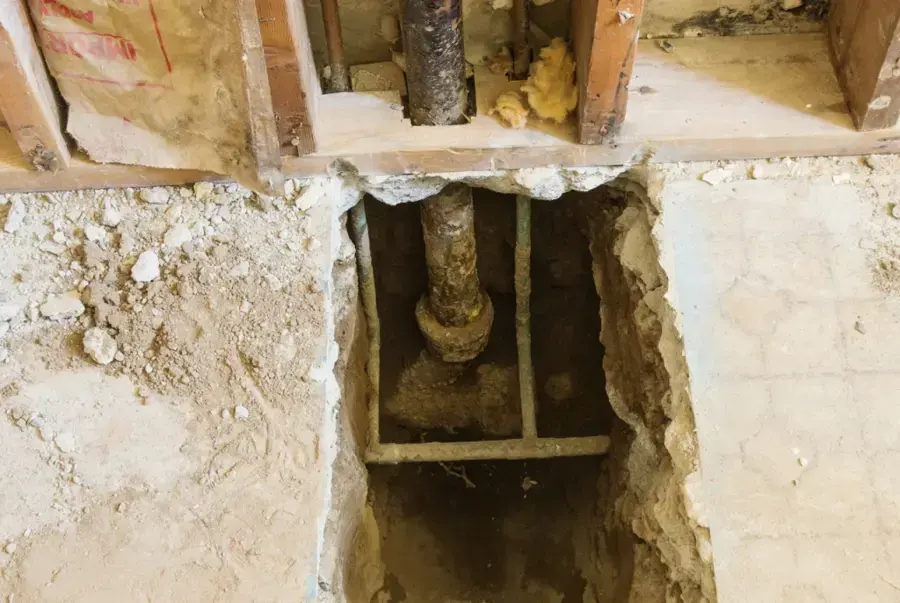
Water damage work versus the plumbing repair
Restoration and plumbing are separate trades. A plumber locates the break and repairs it, sometimes by trenching through the slab or rerouting the pipe, while the restoration crew removes the water and dries what got wet. Both steps matter for the claim, so the scopes stay separate.
- Plumber: find the break, then repair or reroute
- Restoration: extraction, removal and drying
- Adjuster: compares both scopes with the policy
Keeping the water bill, plumber invoice and drying logs together makes the claim file easier to read.
Flooring after a leak
Carpet and pad over a leaking slab usually stay wet longer than the concrete does, so they are often lifted early. Tile may be dried in place when the grout and substrate read dry, while wood and laminate tend to cup and often need removal.
Baseboard is pulled where readings run high so the drywall bottom can breathe. Cabinets and doors on the wet floor are checked too, because moisture wicks upward into toe kicks and jambs long before a stain shows. See structural drying for how that equipment is sized.
Slab leaks in condominiums and rented homes
Laguna Hills housing includes condominiums, apartments and mobile homes alongside detached houses, and 25.3% of units were renter-occupied at the 2010 census. A slab leak in a ground-floor unit can reach a neighbor, so each side is mapped and its records kept apart.
Tenants should report the leak to the landlord or association first, since access to the plumbing is often controlled by them. The condo and townhome page covers the shared-wall details.